
Agents are outpacing CI. Governed velocity is the answer
Traditional CI assumes software changes arrive at a human pace. AI agents break that assumption, and more compute or fewer checks won't fix it. Here's how to keep testing rigorous while letting agents move quickly.

For years, continuous integration has followed a sensible rule. Before a change can merge, it must pass a series of tests that would assure the code’s quality. That worked before because human-driven changes arrived at a pace the CI pipeline could absorb, where the time and compute spent on checking each change was an acceptable price for keeping systems safe.
What was an acceptable price before is now a choking bottleneck for AI agents. Agents can write, test and propose changes rapidly and around the clock, meaning that the hard part of engineering has moved from producing code to validating it. A pipeline designed around occasional human contributions quickly becomes the bottleneck for a team running dozens or hundreds of agents at once.
While the obvious responses are to either live with the queue, buy more compute or run fewer checks, none of those actually deals with the underlying problem. So, what does the next generation control model built for agents actually look like?
Traditional CI is becoming the bottleneck
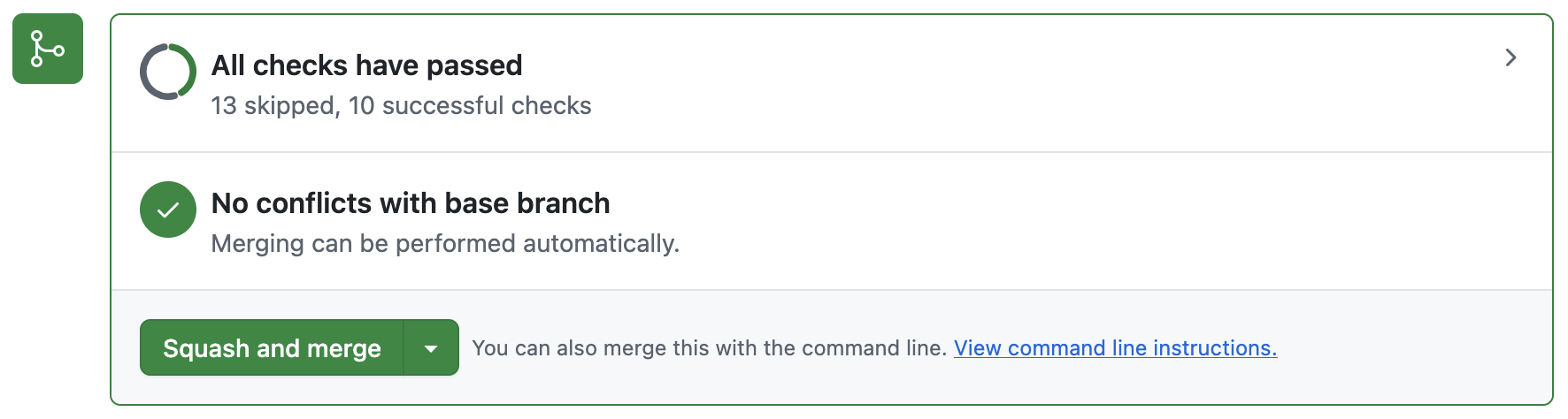
Git and the pull request have long been the accepted model for controlling software change. The conventional approach treats each pull request as the unit of assurance. Before merging changes, engineering teams apply the required checks, often including a broad test suite to confirm that the system works as expected. At low volumes, this is relatively straightforward, with changes validated sequentially as they arrive. At the scale of agent-led development, however, four weaknesses appear.
- Repeated work: Several agents proposing unrelated changes can each trigger the same fixed costs of expensive tests on wider system health. The effort going into validation grows with the number of changes, even when those many changes are small and it seems that the system itself is barely moving.
- Waiting as a proxy for safety: Waiting for a full suite feels rigorous, yet the wait itself proves nothing on its own. What really matters is whether the right checks ran, whether the integrated system works and whether the exact version being released is verified. Agents spamming these tests create noise that can be hard to distinguish from true validation.
- Noisy failures: Busier pipelines put a strain on testing infrastructure, bring about more timeouts, interruptions and unrelated failures. Mixed in with the genuine defects, it means that engineers and agents have to spend more time working out what the pipeline is trying to tell them and less time actually improving the software.
- Pressure to bypass: When the official path gets slow enough, teams tend to then try and find workarounds. Batched changes, blind retries, skipped tests or other ways past the controls. A process that started off as a means to reduce risk instead starts to then encourage it.
CI is still important. However, where in the process it should sit becomes ever more important.
Speed versus control is a false choice
The conflict in CI is often framed as choosing a necessary evil between speed versus control. Either every check runs on every change and agents spend much of their time waiting, or checks are cut back and changes go through on trust.
Especially for regulated businesses, the second option is rarely an open one. Change control, operational resilience and audit requirements all call for evidence of how important systems have changed and whether those changes were properly tested.
The first option doesn't guarantee better control either. A long queue and thousands of test runs can sit alongside incomplete evidence, unclear release readiness and no reliable way to contain a failure.
There is another option. At Elvar we’ve worked backwards from these pain points and identified that a more useful test should centre around the proof of three specific and separate things:
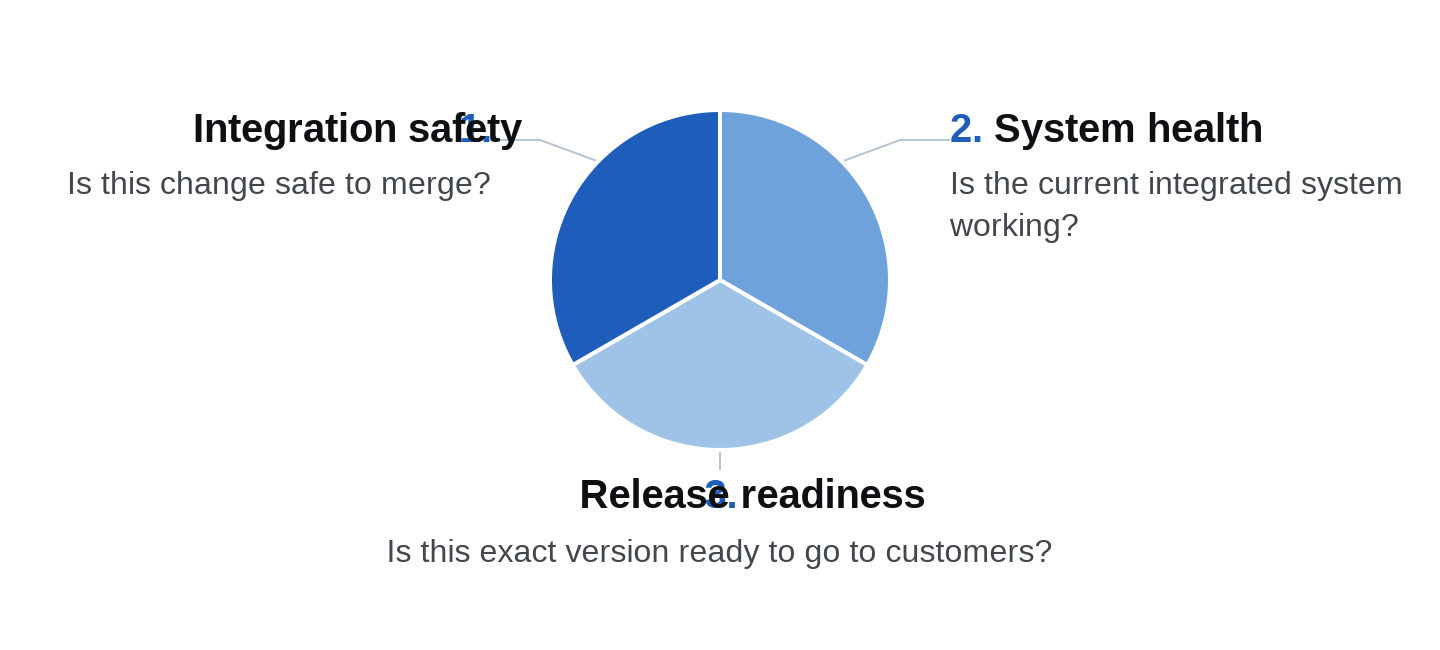
Each one needs its own separate control, rather than being bundled into monolithic CI that tends to over-bloat and drive repetition for little-to-no additional gain.
The art of governed velocity
In an engineering system built for agents, the pull request is still useful for proposing and reviewing a change. It just no longer has to carry the whole burden of proving the system is safe. The model we propose keeps fast checks at the point of change, runs complete verification against the integrated system and keeps the release gate strict. It has five parts:
Fast, relevant checks before merge
Every change still gets an immediate verdict. Security controls, code-quality checks and the relevant tests all run before anything can merge. Relevance is the important part. A documentation fix and a change to authentication shouldn't follow the same path, so test selection should only reflect what actually changed. Anything unknown or sensitive should widen the checks rather than quietly receive fewer. Agents get rapid feedback and the early controls stay in place.
Complete verification of the integrated system
The full test suite still runs against the software’s latest integrated state but more occasionally at regular intervals and across batches of changes. Changes that pass individually can still fail in combination, and testing the integrated system catches those interactions directly. A stack of green pull requests is no guarantee of a healthy whole. Less repetition doesn't mean less testing, and the complete suite stays firmly in the control model.
Automatic fault isolation and containment
When full verification fails, nobody should have to dig manually through a queue of recent merges. The system should rerun the failure, isolate the responsible change and prepare a revert with the supporting evidence attached. The agent that made the change then receives the failure and works on a fix. For ordinary, reversible code changes, containment necessarily happens inside the pipeline.
Strict gates for releases and irreversible actions
Some actions can't be reliably undone, such as certain data migrations, credential changes and financial operations. These need stronger controls before they proceed, and speed gained elsewhere is no reason to loosen them. Releases stay as explicit control points too. The exact version going to customers should need a fully green verification run, and evidence attached to an earlier commit or a single pull request isn't enough. At no point does this approach release unverified software.
Evidence across the whole lifecycle
The record should link the proposed change, the checks it received, the integrated-system results, any reversal and the final release decision. An auditor or engineering leader can then reconstruct what changed, which controls applied, what failed, how the system responded and which version was approved. That evidence should be tamper-evident and independently checkable, so evidence of control can be demonstrated whenever it's asked for.
This is governed velocity. Agents move quickly where work is reversible, applies stronger controls where consequences are harder to undo, and keeps continuous proof that the overall system is healthy.
Our approach: Atlas
We’ve built on this idea of governed velocity for ourselves internally and called it Atlas. Using the same foundations of agent governance as Mantle, Atlas enables us to move faster internally and with confidence that our agents are delivering efficiently but with the right oversight.
If you're rethinking your delivery pipeline for AI agents, we'd like to compare notes. Get in touch with me directly or book a conversation with the team.